
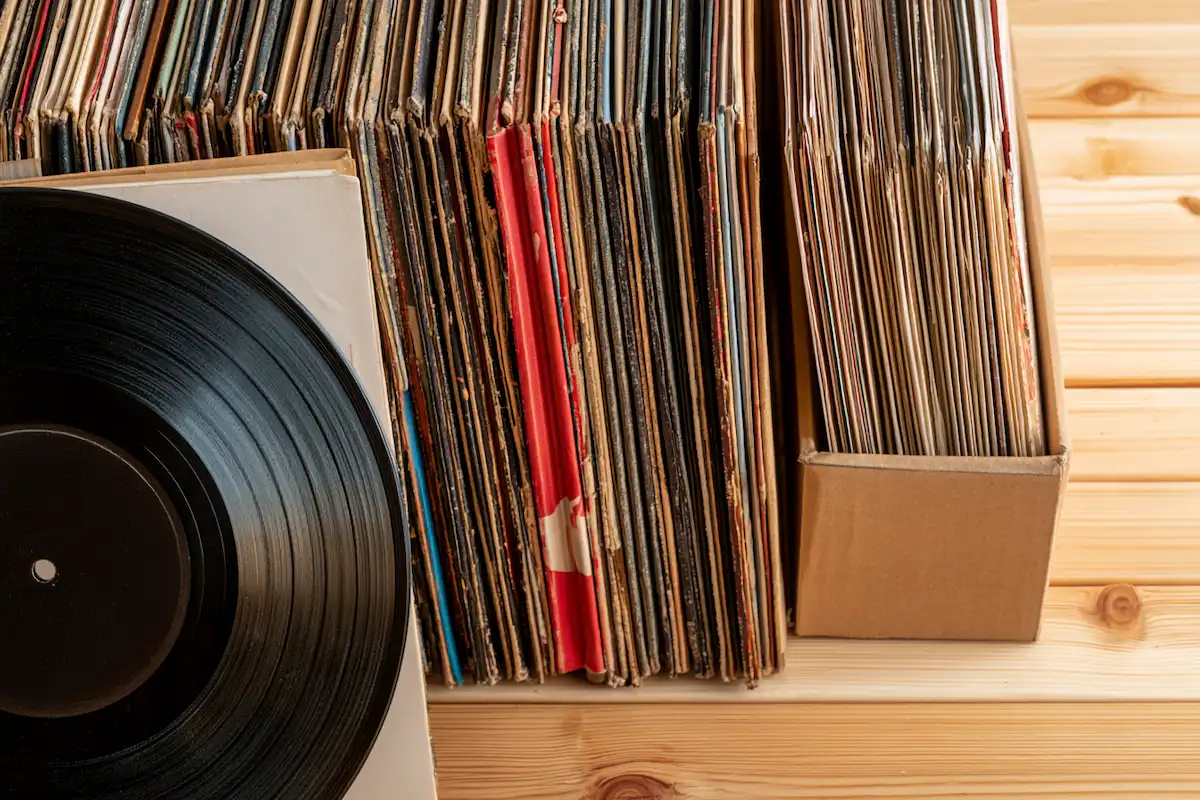
One of the most common things first-time sellers say when they reach out about a collection is: “I don’t really know how to describe it.”
They’re not collectors. They inherited the records, or found them while cleaning out a home, or are selling on behalf of someone else. They can see there are records in front of them, but they’re not sure what to say about them.
The good news is you don’t need to be a collector to give a buyer enough information for a useful first conversation. You just need to know what to look for.
Ready to reach out? Fill out our form or call DJ Records™ at (888) 993-4673 and we’ll help guide you through it.
Start With Size, Not Value
The single most useful piece of information you can share upfront is how many records you’re dealing with, even if it’s a rough estimate. Buyers use this to understand the scope of what they’re being asked to look at.
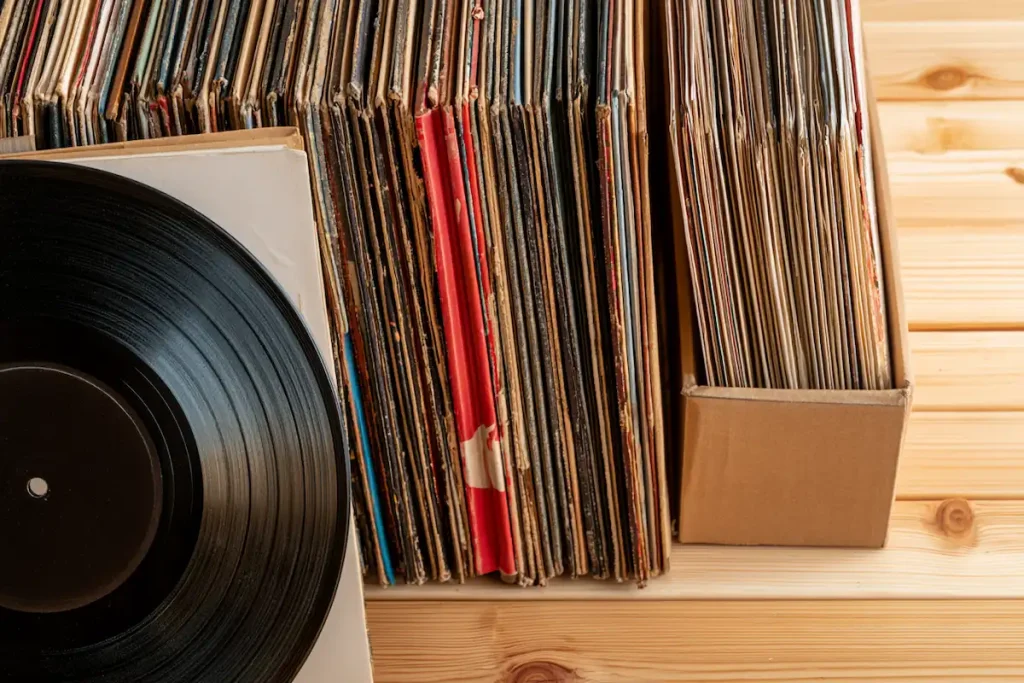
You don’t need an exact count. “Around 200 LPs,” “maybe 10 boxes,” or “two full shelves plus some loose ones in the basement” is enough to start. If you’re not sure, a standard record crate holds roughly 50 LPs. A banker’s box holds around 40 to 50. Using those as rough reference points gives a buyer something to work with.
Describe What You Can See on the Spines and Labels
You don’t need to know whether a record is valuable to describe what’s on it. Pull a few records out and look at the spines. What names do you see? Are they artists you recognize, or mostly unfamiliar ones? Is there a consistent genre you can identify, like classical, country, or jazz?
Look at the labels on the records themselves. Some label names are worth mentioning even if you don’t know what they mean: Blue Note, Prestige, Atlantic, Chess, Columbia, Capitol, RCA, Motown. If you see any of these, it’s worth passing along. Buyers recognize them immediately.
You don’t need to interpret any of this. Just describe what you see.
Note the Formats
Most people can tell the difference between a standard 12-inch LP, a smaller 45 RPM single, and the larger, older 78 RPM records that predate the modern LP. If the collection includes a mix of these, or mostly one type, mention that.
If you see anything unusual, like colored vinyl, records in picture sleeves, or anything that looks different from a standard black LP, note that too. You don’t need to explain what it is. Just mention that it’s there.
Describe the Condition Simply and Honestly
You don’t need to know the formal grading scale to describe condition in a way a buyer can use.
- “Most of the sleeves look clean, a few are worn at the edges.”
- “Some records have visible marks on the surface, others look barely played.”
- “The covers are in rough shape, but the records themselves look okay.”
- “Everything has been stored in protective sleeves and looks well cared for.”
Honest and approximate is more useful than technical and inaccurate. Buyers expect some variation in any collection, and they’ll assess condition themselves once they see the records. Your job is just to give them a general picture.
Mention How the Collection Was Stored
Storage history is more relevant than most sellers realize. A collection kept in a climate-controlled room, standing upright in proper record storage, tells a very different story than one that’s been in a garage or attic for twenty years.
You don’t need to know why storage matters, just describe it: “They’ve been in a spare bedroom closet,” or “They were in the basement, in boxes, for a long time,” or “My father kept them on shelves in his office.” That context helps a buyer calibrate what they’re likely to find when they arrive.
A Few Things You Don’t Need to Know
Sellers sometimes hold off on reaching out because they feel like they should have more information first. To be clear: you don’t need any of the following before contacting a buyer.
You don’t need to know what individual records are worth. You don’t need to have researched prices online. You don’t need to understand the difference between an original pressing and a reissue. You don’t need to organize or sort anything. And you don’t need to have a complete inventory.
A buyer like DJ Records™ will evaluate the collection in person once they have enough basic information to decide whether a visit makes sense. The first conversation just needs to get both sides to that point.
Photos Can Help, But Keep Them Simple
If you’re reaching out by form or email, a few photos can speed things up. The most useful ones are:
- A wide shot showing the overall size of the collection
- A close-up of a section of spines, so the buyer can see some of the titles and artists
- A photo of a few labels if anything looks unusual or unfamiliar
You don’t need professional photos or a carefully staged setup. A phone camera and decent lighting are plenty.
Just Start the Conversation
The first message or phone call doesn’t have to be comprehensive. DJ Records™ works with sellers who are new to this process all the time, including people handling inherited collections or downsizing after decades of accumulation. We know how to ask the right questions once the conversation starts.
If you have records you’re thinking about selling, and you’re not sure where to begin, beginning with us is a reasonable first step.
WE BUY OLD RECORDS!
We’ve been buying LPs, 45s, 78s & 12″ singles for well OVER 20 YEARS.
No collection is too large!
