

If you’ve started looking into selling records, you may have noticed that not all buyers operate the same way.
Some focus on individual albums, while others only work with record collections.
That difference can be confusing — especially if you’re not a collector and didn’t plan on selling records in the first place. This page explains why some buyers focus exclusively on collections, and what that approach means for people considering their options.
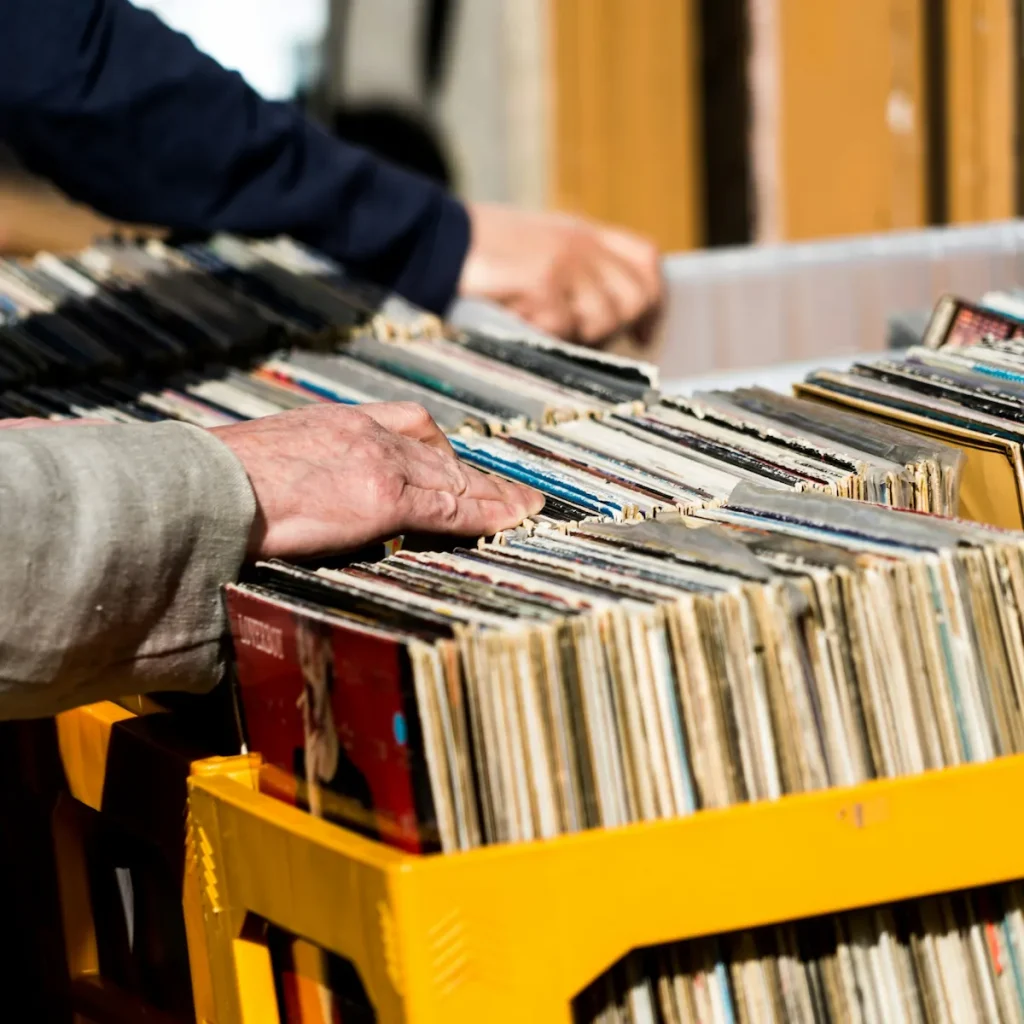
Individual Records vs. Record Collections
Selling individual records often involves:
- Researching titles and pressings
- Listing items one by one
- Communicating with multiple buyers
- Packaging and shipping records safely
For a small number of high-demand records, that process may make sense. But most real-world record groups aren’t made up of isolated, single-title items. They’re collections built over time.
Record collections usually include:
- A range of genres and artists
- Different decades and formats
- Mixed condition
- Records that make more sense together than apart
As a result, many buyers choose to work at the collection level rather than the individual record level.
Why Some Buyers Focus Only on Collections
Collection-based buying allows for a broader, more realistic evaluation.
When a buyer looks at a full group of records at once, they can:
- Understand the overall scope and consistency.
- Factor in condition ranges across the collection.
- Account for records that balance each other out.
- Make clearer decisions without cherry-picking.
This approach also reduces uncertainty for sellers, who don’t have to guess which records matter and which don’t.
What This Means for Sellers
If a buyer only purchases collections, it doesn’t mean every record in those collections needs to be rare or valuable.
It usually means:
- The buyer is interested in the whole group, not just highlights.
- Partial or mixed collections can still be considered.
- You don’t need to separate or research individual albums.
- The process is designed to be straightforward.
Collections don’t have to be complete, pristine, or carefully curated. Many are reviewed exactly as they’ve been stored or used.
Why Collections Often Lead to a Smoother Process
Working with collections rather than single records can reduce friction on both sides.
For sellers, it often means:
- Fewer decisions to make
- No need to list, ship, or meet multiple people
- Clear communication from start to finish
For buyers, it allows for realistic offers based on the full picture—not on assumptions from a single title.
Common Situations Where Collection Buyers Make Sense
Collection-based buyers are often contacted when:
- Records are inherited or passed along.
- A household is downsizing or moving.
- Storage space is limited.
- Records have been untouched for years.
In these situations, convenience, clarity, and trust tend to matter more than breaking up a collection.
A Practical, Transparent Approach
DJ Records™ works exclusively with record collections across the contiguous U.S. We focus on clear communication, in-home evaluations when appropriate, and fair cash offers based on the collection as a whole.
We don’t guarantee outcomes, and we don’t expect sellers to have technical knowledge. Our goal is to provide straightforward answers so people can decide what makes sense for them.
Why This Matters When Selling Records
If you’re not a collector, selling individual records can feel overwhelming. Collection-based buyers exist because most record owners — and record situations — aren’t built around single items.
Understanding how and why buyers work with collections can make the process easier to navigate, even if you’re still deciding what to do next.
WE BUY OLD RECORDS!
We’ve been buying LPs, 45s, 78s & 12″ singles for well OVER 20 YEARS.
No collection is too large!